
Why Experience Matters When Installing a Termite Management System


Termites are a serious concern for Mackay homeowners. Our warm, humid climate creates ideal conditions for termite activity, and the damage they cause is often hidden until it becomes extensive.
A professionally installed termite management system can significantly reduce the risk of termites gaining concealed access to your home. However, the quality of the protection depends on much more than the chemical being used.
It depends on how carefully the property is assessed, whether every relevant area is identified and, most importantly, how the system is installed.
At All Things Pest Control, we take great pride in delivering complete, carefully installed termite management systems backed by decades of local knowledge and hands-on experience.
Local Experience You Can Trust
Director and senior technician Josh Lovett has more than 20 years of hands-on termite and pest management experience in Mackay. As a second-generation pest controller, Josh has spent much of his working life understanding local termite behaviour, Mackay’s building styles and the conditions that can increase the risk of termite entry.
Josh leads an experienced team of termite technicians whose industry knowledge spans decades. Together, our technicians have installed thousands of termite management systems across Mackay and the surrounding region.
This experience matters because every property is different—and not every termite management quote provides the same level of protection.
Construction details, internal joins, extensions, changes in floor level, restricted access and environmental conditions can all affect how a system needs to be installed. Some of these details may not become visible until the installation begins.
Our technicians know what to look for and how to respond when these areas are uncovered. On arrival, we treat what the property requires, not simply the most obvious or easily accessible areas, to provide a complete system installed in accordance with applicable Australian Standards and registered product directions.
What Is a Chemical Termite Management System?
A chemical termite management system—commonly called a chemical termite barrier—creates a treated zone in the soil around relevant areas of a building.

Subterranean termites generally travel through the soil when searching for food. A correctly installed treated zone is positioned in their likely path, helping to reduce the risk of termites gaining concealed access to the building.
The system does not make the property termite-proof, and it does not stop termite activity from occurring elsewhere on the site. Its purpose is to help manage the risk of concealed termite entry and expose termites to the treatment as they travel towards the building.
For this reason, the system must always be supported by regular Timber Pest Inspections and sensible property maintenance.
How Does Our Non-Repellent Fipronil Treatment Work?
All Things Pest Control uses a high-quality, non-repellent Fipronil treatment for our proposed chemical termite management systems.

Unlike repellent termiticides, a non-repellent treatment is not readily detected by termites. This means termites may continue travelling through the treated soil without immediately recognising that the area has been treated.
Termites that come in contact with the treated zone pick up the active ingredient. Through their normal movement and interaction with other termites, small amounts may then be transferred to other members of the colony.
Because Fipronil has a delayed action, affected termites may return to areas of colony activity before they die. This transfer effect can provide control beyond the immediate treatment area and may help suppress termite activity within the colony.

While this is an important benefit of a non-repellent treatment, no responsible pest management company should promise that every termite colony will be completely eliminated. The outcome will depend on factors including the location of the colony, termite movement and the extent of contact with the treated zone.
Why the Installation Is Just as Important as the Product
Even the best termiticide can only perform as intended when it is applied correctly.
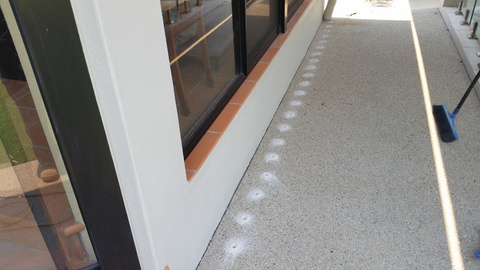
A professional installation requires much more than simply trenching around the outside of a home or drilling through concrete. The technician must understand how the building has been constructed, identify potential concealed entry points and determine how the treated areas connect to form a complete system.
This may involve considering:
Internal and external construction joins
Concrete paths, patios and tiled areas
Extensions and alterations
Changes in ground or floor level
Plumbing and service penetrations
Garden beds and landscaping
Moisture and drainage conditions
Restricted or concealed access points
Areas where the system could later be disturbed or bridged
These are the important details that experience helps us recognise.
When unexpected construction features are uncovered during installation, our technicians do not simply ignore them because they were not visible when the quote was prepared. We assess what is required and incorporate the relevant areas into the installation so the property receives a properly completed termite management system.
That is why homeowners should compare more than the final price when considering termite management quotes. Two quotes may use similar terminology but may not necessarily allow for the same areas, installation method or level of protection.
Why We Take Pride in Every Installation
A termite management system is an important investment in the ongoing protection of your home. We treat it accordingly.

Our team takes pride in carefully planning each installation, preparing treatment areas correctly and completing the work in a professional and methodical manner. We also take the time to explain what has been installed, how the system works and what the property owner needs to do to help protect it.
Our goal is not simply to complete the treatment and leave. We want our clients to understand the system they have purchased and feel confident that it has been installed by experienced local professionals.
Following installation and cleared payment, clients receive their termite management system documentation, including:
An installation certificate
Treatment information and plan
Free Service Period documentation
Care and maintenance information
A courtesy reminder when the annual Timber Pest Inspection is approaching
Understanding the Free Service Period
Our termite management systems include an initial 12-month Free Service Period, known as the FSP.
This renewal is subject to the FSP conditions and satisfactory annual Timber Pest Inspections. The FSP may be renewed annually for up to eight years from the original installation date.
If termite entry occurs while the FSP is current, All Things Pest Control will provide the applicable remedial termite treatment and reinstate the affected section of our treated zone at no charge to you.
The FSP does not cover termite damage or building repairs. Full eligibility, renewal and service conditions are provided with your proposal and FSP documentation.
The Fipronil HP treatment used in our proposals has an expected effective life of up to eight years when installed in accordance with its registered label. However, landscaping, soil disturbance, moisture, excavation, plumbing work and changes to the building perimeter can affect the integrity and performance of the treated zone.
Why Annual Timber Pest Inspections Remain Essential

An annual Timber Pest Inspection is not simply checking whether the chemical is still present.
It checks whether termites have found a way around the treated zone and whether anything around the property has changed since the system was installed.
Regular inspections are recommended at intervals of no more than 12 months, with more frequent inspections sometimes advised for higher-risk properties.
During an inspection, we look for termite activity, evidence of concealed entry and conditions that may increase the property’s risk. This provides an opportunity to identify developing problems before they result in significant damage.
Annual Timber Pest Inspections are also required to maintain eligibility for the Free Service Period.
Protecting Your Termite Management System
A treated zone can be accidentally disturbed, concealed, or bridged after installation.
We strongly recommend contacting All Things Pest Control before undertaking any of the following around your home's perimeter:
Landscaping or gardening: Placing new soil, mulch, or garden beds against external walls.
Renovations & structural changes: Adding pathways, patios, decks, or building extensions.
Groundworks: Excavation, paving, or installing new garden edging.
Plumbing & utilities: Any repairs or new service penetrations through the treated zone.
Professional Termite Protection for Mackay Homes
When you choose All Things Pest Control, you are choosing an experienced local team that understands termites, construction and the conditions found throughout the Mackay region.
Our professionalism is reflected in how we assess your property, how we plan the treatment, how carefully we complete the installation and how we support you afterwards.
We do not believe termite protection should be treated as a one-size-fits-all service.
Every home deserves a system designed and installed around its actual construction and site conditions.

Protect Your Mackay Home Today!
Every home deserves a termite management system designed and installed around its actual construction and unique site conditions. Don't risk the integrity of your property on an inexperienced, cut-price installation.
Contact our friendly local team at All Things Pest Control Mackay today for professional advice or to request a comprehensive termite management proposal!


